Your Cart
Items
Free Shipping on orders over $0.00
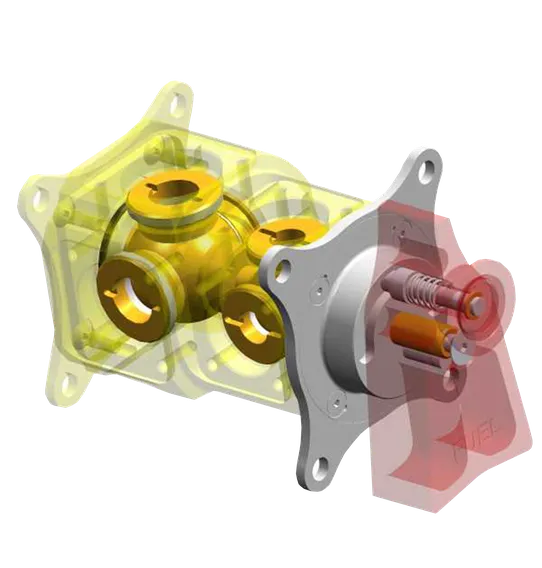
Part # FS25-20-D2-6M
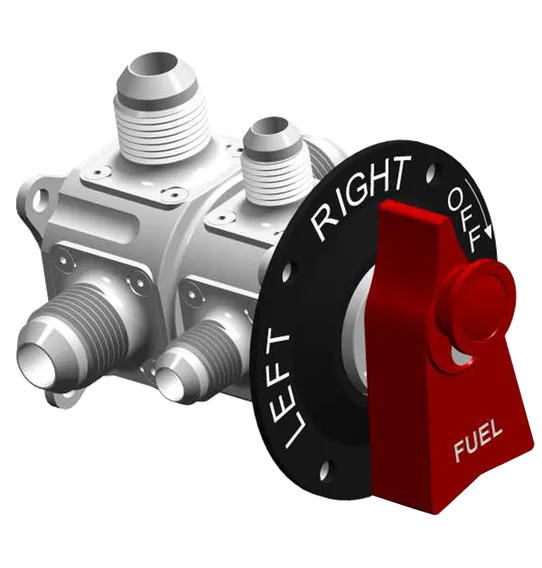
DUPLEX FUEL SELECTOR
Product Details
Specifications
- Approval
- Condition
- New
- Manufacturer
- Andair
- Dimensions
- L: 5 x W: 4 x H: 4 in
- Weight
- 2 lbs
- Unit of Measure
- Each
- McFarlane Part Number
- FS25-20-D2-6M
Product Description
Andair FS2520 Duplex 1/2" Fuel Selector
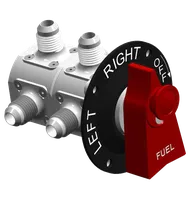
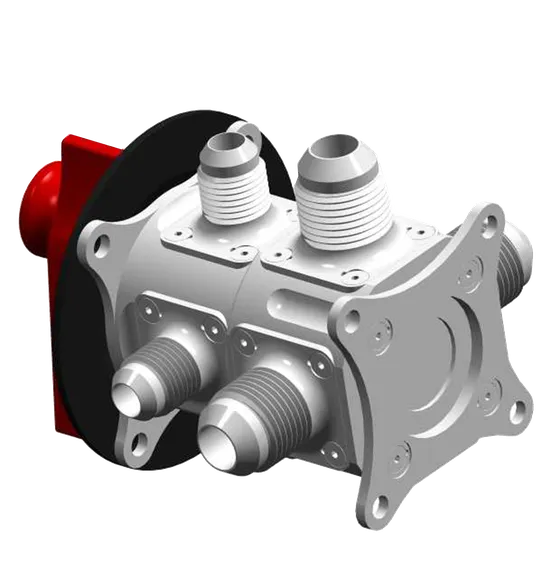
The FS2520 is a 3-way 1/2" duplex fuel selector and allows for two lines to be switched simultaneously, this means that the return fuel from the engines fuel injector/manifold block can be returned to the same tank from which it was drawn. The valve has the positions LEFT - RIGHT - OFF.
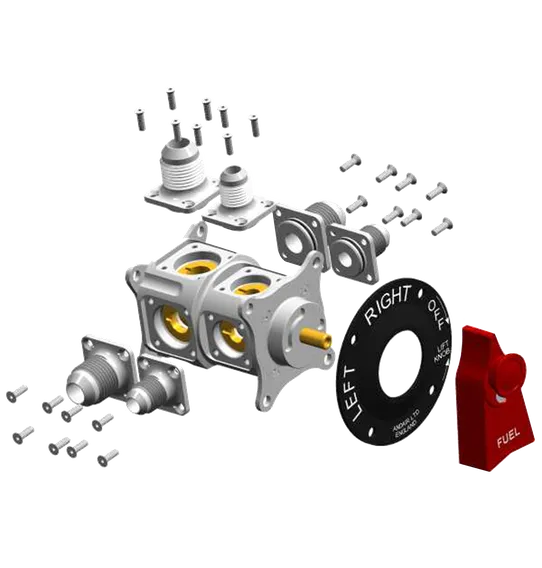
When the valve is in the ON condition, there is an easy action between the LEFT and RIGHT position. Inside the valve is highly polished ball valves packed with precision PTFE seals. This not only provides smooth action but also gives a perfect seal.
To switch the valve to OFF the red safety button on top of the lever must be raised. This helps prevent the pilot inadvertently switching the fuel OFF. The FS2520 has a 1/2" feed section and a 3/8" return section. A variant of the FS2520 valve is used to supply engines such as Continental IO-550-N and is used in the acclaimed Cirrus SR22.
The lower section can only be used as the feed and the upper section as the return. Each section must be completely sealed from each other so there is no chance of any leakage from feed to return.
Fittings:
- Lower Inlet, LH/RH Tank: Male AN-8, JIC-8
- Lower Outlet to Engine: Male AN-8, JIC-8
- Upper Outlet to LH/RH Tank: Male AN-6, JIC-6
- Upper Inlet from Engine: Male AN-6, JIC-6
About Duplex Fuel Selector Valves:
Duplex fuel selectors have two separate compartments, allowing two independent fuel lines to be switched simultaneously. This makes them ideal for fuel-injected engines where a return line is needed. One significant benefit of these valves is that fuel can be returned to the same tank from which it was drawn thus preventing the need to dump fuel overboard. They can be supplied with either 1/4", 3/8" or 1/2" supply lines.
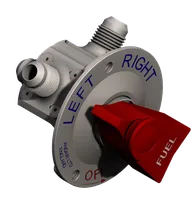
All Andair valves are designed for safety and incorporate several design features that allow a positive selection action. There is a large red lever with 'fuel' engraved on it and a clearly labelled fascia plate to indicate which tank has been selected. The lever also incorporates a safety detent mechanism. This feature acts in two ways. It allows for a good solid detent at each tank position, and the button on top of the lever must be raised to switch the fuel off. All these features help prevent the pilot switching the wrong tank or turning the fuel off.
FAQ:
Why use an Andair Duplex Valve to return the fuel to the same tank from which it was drawn? Why can't I return it to a single tank.
Returning the fuel to the same tank from which it was drawn does away with any potential over filling issues. If you return to a single tank, and you happen to be feeding from the other tank (perhaps the pilot is unaware of the fuel system layout) and that tank is full, you will start to dump fuel overboard. This is not a problem on short flights, however if you are doing a long leg, you could get a fuel outage.
WARNING: Cancer and/or Reproductive Harm - California Proposition 65 Resources
FAQs
How do I keep contaminants out of my fuel system?
The fuel selector valve works in unscreened fuel. Contaminated fuel can cause selector valve seal damage. When fueling from possibly contaminated fuel sources McFarlane recommends the use of a fuel filter, such as Mr. Funnel or another filtering device, to reduce trash in the fuel system.
What pressure is used to test the fuel selector valves after repairs?
We pressure test our repaired valves to a minimum of 5 psi using precision controlled air pressure and a calibrated low pressure indicator. This pressure is above the normal fuel pressure on the valve and below the limits of the springs in the valve. Each valve is submerged in Stoddard solvent while the air pressure is applied to the valve. The valves are then tested in each position to assure that there are no inter-port or external leaks. Leaks are detected by looking for air bubbles escaping from the valve.
How do I know when to replace or service my fuel selector valve?
The most common indication of external fuel valve leaks is the smell of avgas in the cabin. Most valves are located under the cabin floor. Fuel stain on the valve and drain plug or drain valve or on the belly of the aircraft can also indicate external leakage. External leaks are generally around the actuation valve stem. Internal leaks are detected when the fuel is turned off and fuel continues to drip during fuel system maintenance. Inner port leakage will allow fuel from one tank to leak into another fuel tank. This type leak is difficult to detect. Fuel transfer from one tank to another with the fuel valve selected to one tank only will indicate inner-port leakage. An extended period of time is needed to detect fuel transfer from one tank to another. Generally if internal leakage is detected when servicing the fuel system, it is likely there is also inner-port leakage.