Your Cart
Items
Free Shipping on orders over $500.00
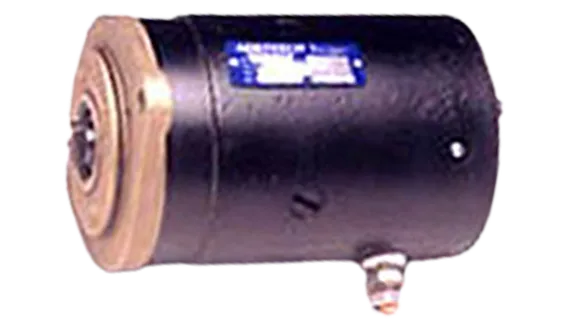
Part # DEL 1108249
12V STARTER, OH, Delco Remy
+ $175.00 core charge (P/N DEL 1108249-C)
Product Details
Specifications
- Approval
- Condition
- Overhauled
- Manufacturer
- Aerotech Aircraft Services
- Dimensions
- L: 13 x W: 13.5 x H: 11 in
- Weight
- 18 lbs
- Unit of Measure
- Each
- McFarlane Part Number
- DEL 1108249
Product Description
Delco Remy 1108249 Overhauled Starter
12V Starter Overhauled, Core Exchange Available
Aerotech of Louisville handles a wide variety of alternators, generators, starters, starter adapters, starter clutches, turbine starter/generators and voltage regulars for general, corporate and military aviation aircraft.
All core returns must be the same part numbers as what was sold to receive full credit.
Core Policy: Any unit being returned for core or warranty credit shall be as removed from the engine, complete and not disassembled. No core or warranty core credit will be allowed for automotive units. Units that are rusty or cannot be overhauled for any reason will be classified as scrap, having no value. Units which have been weld-repaired, as well as units which have been disassembled and the reassembled with old parts will also be classified as scrap, having no value. A percentage of the core value will be charged for all missing or damaged parts. At no time will the damaged or missing parts charge, on any unit, exceed the core value of that unit. Cores must be returned within 60 days from date of purchase.
WARNING: Cancer and/or Reproductive Harm - California Proposition 65 Resources
Cross Reference
Reference only: Please verify this product is appropriate for your use case before adding to your cart.
-
1108249
FAQs
What would cause the drive gear to break on my starter?
In some cases, engine kickback will fracture starter drive gears. Kickback is related to engine set up and can be anything from incorrect timing to problems with the fuel system. If kickback is noticed as a common occurrence on the airplane, diagnose and repair the problem or the replaced starter drive may fracture again. Many of Sky-tec's current starters offer kickback protection.
What would cause drive gear wear and/or a damaged ring gear?
This condition is related to the starter drive extension and retraction and affects all styles of starters. If, during normal extension, the gear does not extend completely, stress will be placed on the drive gear. If the starter drive does not disengage after start, the engine will tend to drive the gear placing stress on the gear and destroying the motor. In either case, the gear will rapidly wear or fracture.
Does the starter drive need to be lubricated periodically?
Sticking mechanical starter drives, e.g., Bendix drives, should be cleaned with mineral spirits and only lubricated with silicone spray. Oil or common greases should not be used as they will attract and retain dust and grit causing the starter drive to stick or wear rapidly.
Solenoid-actuated starters do not require any type of cleaning or lubrication. If the starter is not going to be used for some period of time the shaft can be oiled to prevent corrosion.
Why does my starter engage intermittently?
There are two potential causes of this condition. If it is a mechanical starter drive (Bendix) and sticks intermittently, it most likely needs to be lubricated. This type of starter drive is initially lubricated to allow smooth operation. The drive gear must move in and out and also rotate. In use it can become dry and may begin to stick and fail to engage or disengage. We recommend lubricating this type of starter drive every fifty (50) hours of operation.
The other likely factor for intermittent engagement would be a faulty starter contactor. If you want to check a contactor, it is best to do so with a load applied. Resistance in the contactor, even a fraction of an ohm, is enough to produce poor or no operation due to the high current field. In a 12-volt starting circuit drawing 60 amps, for example, the addition of 0.2 ohms of resistance due to an oxidized connector or carbonized contact may drop the current to the load to 36 amps. This is a 40-percent loss in starter operating power caused only by a 0.2-ohm resistance.
Checking the circuit without a load would require that a lot of resistance be placed in line. The best method of checking the contactor is to disconnect the lead from the starter and connect it to a battery load-meter tester. Activate the contactor and check the voltage on each side of the contactor. A 0.1-volt drop is normal for a new or nearly new contactor. If you find any more than 0.3-volt drop, replace it.
After the start button is released, why does the starter appear to briefly remain engaged?
This is normal for a permanent-magnet starter. Although power is removed by releasing the key/start button, a permanent-magnet motor will actually provide power to itself as it winds down and will keep the starter drive engaged for about a half-second until it loses sufficient RPM to fully disengage.
Why does the starter drive gear remain engaged for an extended length of time after the start button/key was released?
THIS CAN BE A DANGEROUS SITUATION. The starter contactors in many older aircraft may become welded shut after years of use. BE EXTREMELY CAREFUL. A starter contactor that is welded shut could cause the propeller to rotate when the master switch is energized, regardless of the position of the start button or switch. Replace the starter contactor. Your starter may have been damaged by this as well and may also need to be overhauled or replaced.
Why is my new lightweight starter noisy?
Lightweight starters do not have as much housing bulk surrounding them, so they aren’t as effective at insulating the gear train noise from the operator. To compound the issue, switching from a legacy heavyweight starter to a lightweight starter may also change the design style from a direct drive to a gear reduction drive in order to obtain the same drive torque. Gear-reduced starters have a much different noise signature than direct drive starters.