Your Cart

Items

Total
Shipping and taxes calculated at checkout

Your Cart

0 Items

Total $0
Shipping and taxes calculated at checkout
Displaying 1 - 1 of 1 Results

Filters

Add Aircraft

Categories

"Nose Strut Kits" in Door Hinges and Pins

1 products

DOOR HINGE, Landing Gear, Inboard, PA-31

$2,459.20
Retail Price: $3,074.00
See Eligible Aircraft
Expected ship date is 06-03-2026.
1

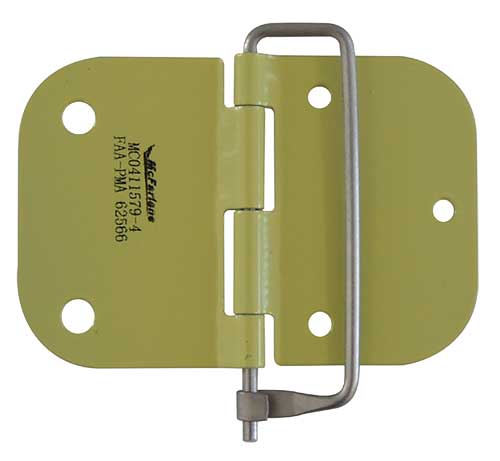
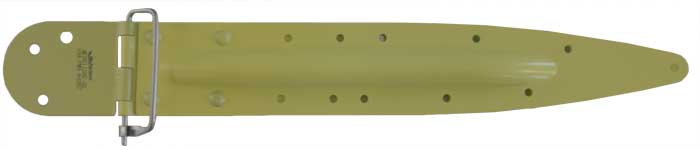
Cabin Door Hinges for Cessna Aircraft 

Cessna 170, 172, and 175 Series Aircraft
Straight or bent hinges available — check your aircraft to order the correct style


Improved McFarlane design 

  • FAA-PMA approved welded design
  • Thicker alloy steel
  • Heat-treated for extra strength and wear resistance
  • Precision pin holes for longer life
  • Pre-drilled and epoxy primed
  • Catalog Eligibility

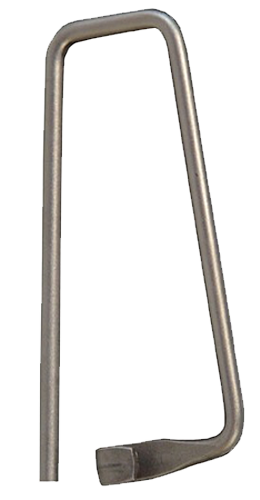
Cabin Door Hinge Pins

Don't trust those old brass pins!

  • Fast door removal — makes cabin maintenance easier!
  • FAA-PMA approved design 5x stronger with stainless steel
  • Easy to inspect
  • Secure safety pin design
  • Convenient kit available: Kit P/N CDHP-KT-1 contains four hinge pins


Bent or Straight Hinges - Only from McFarlane!

Ensure the right fit for your Cessna!

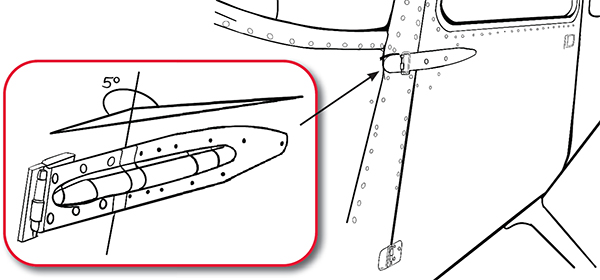
Cessna legacy airplanes, built prior to 1979, feature a door post skin that angles inward (toward the front edge of the door). Aircraft with this bend require a hinge with a 5° bend for correct installation. Later models and new production aircraft do not have this inward angle and use a straight hinge.

McFarlane manufactures both bent and straight hinges. We HIGHLY recommend verifying your door hinges before ordering. When in the field, replicating the 5° bend from a straight hinge is very difficult and rarely correct. Let us take away the worry and provide you with the correct hinges today!

Please note that McFarlane does not have exact serial number information as to when the hinges went from bent to straight.

Maintenance Tip!
The Cessna doors have tremendous leverage on the forward door seals. Door hinge and hinge pins can easily be over stressed and fail if incorrect door seals are installed. Always use approved door seals that are designed for your aircraft.

Maintenance Tip for Door Hinge Replacement: To install new hinges, temporarily attach the replacement hinges to the door using temporary fasteners. Install the door and hinge pins. Verify the door alignment with the door opening. The leading edge of the door should be approximately flush with the adjacent door post skin. Minor bends can be made to the upper hinges to perfect the door fit. Please reference the ICA.

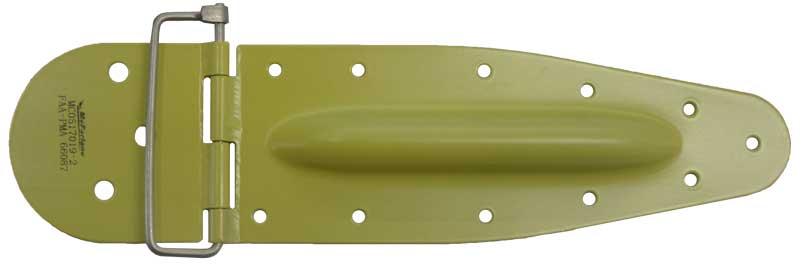
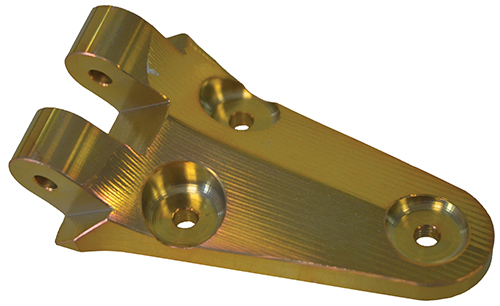
Cabin & Cargo Door Hinges for Cessna Aircraft 

Cessna 180, 185, 205, 206, 207, and 210 Series Aircraft

Improved McFarlane design 

  • FAA-PMA approved with improved machined design
  • Better fit and form than competitor's forged hinges
  • Available drilled or undrilled
  • Save $$$
  • Catalog Eligibility

Quick Removal Clevis Pin and Cotter Key 

New and improved design replaces staked-in hinge pin!

Cessna 180, 182, 185, 205, 206, 207, and 210 Series

  • FAA-PMA approved design replaced staked-in Cessna hinge pin
  • Easy door removal for maintenance
  • Corrosion resistant

Door Hinges for Cessna Caravan

Door hinges have bushings for longer wear!

As the original equipment hinge halves wear and the aircraft door starts to sag, Cessna Service Bulletin CAB96-2 allows a one time repair through the use of an oversize door hinge pin. When the hinge again becomes worn and the door sags, the hinge halves must be replaced and an original size hinge pin re-installed.

  • FAA-PMA direct replacements
  • Fits all Cessna 208/208B aircraft
  • Anodized for corrosion resistance
  • Precision fit
  • Available with or without bushing
  • Replaceable bushings allow extended service life!
AF2617015-18
AF2617015-19

For ordering information go to Caravan Door Hinges.

Coming Soon! Early Cessna Door Hinges - 120, 140, and 150 Series. 

Related Information

Why did my Cessna nose strut seal fail?

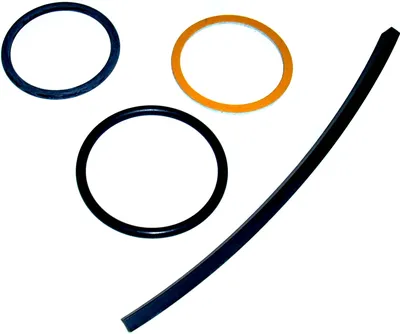
Strut seal leaks and flat struts can be caused by roll or twist of the main O-ring seal. It is very frustrating to carefully check all the parts and surfaces and put a new seal kit in the strut only to find it flat again after a relatively short time. We have seen this happen when a film of MIL-5606 hydraulic fluid dries out on the exposed chrome strut shaft. MIL-5606 by nature has a tendency to get sticky as it is exposed to air and dirt and then dry.


Very slight dried oil films are sometimes hard to detect and they can get past the plastic wiper seal. When this happens the sticky strut has a tendency to grab the O-ring and roll or twist it when the strut slides in or out causing the seal to distort. A very small O-ring twist or distortion will cause a leak. This phenomena is aggravated by the low pressure that the Cessna strut is designed for. Wipe the chrome strut down with Stoddard solvent (mineral spirits) periodically to soften and remove any dried oil film, dirt, dust and bugs.

What other McFarlane products work well with this part?

This ring retainer pairs well with McFarlane’s FAA-PMA nose strut seal kits, nose bearings, and inner barrel assemblies. McFarlane continues to develop additional nose strut replacement components, so we recommend checking our newest products for a comprehensive list of options.

What does the Torque Link Stop Lug do?

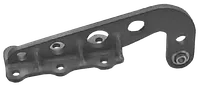
The torque link stop lugs are more important than you would think. Overextension of the nose strut due to a worn out stop lug can lead to a cascade of problems. McFarlane A&P mechanics have seen struts over extend to the point where the metering pin comes out of the orifice. This results in loss of damping action and the pin hammering the orifice every landing and distorting and enlarging it. Over time, the excess nose strut travel and lack of damping can result in fatigue cracks in the torque link arms. McFarlane recommends thoroughly inspecting all nose strut components when replacing a severely worn stop lug.


The stop lug also acts as a centering device aligning the nose wheel and wheel pant straight with the airplane and slip stream after it has left the runway. Worn stop lugs can allow the nose wheel to lock in a turned position in flight that will require holding rudder for coordinated flight. Retractable gear aircraft depend on the stop lug to properly center the nose gear steering before it retracts into the wheel well.

What is a gear ring retainer?

A gear ring retainer (also known as a packing retainer) is a shaped metal ring that supports and stabilizes the bottom of the nose strut seal stack. It helps keep the locking strut ring secured in its groove.

I installed a torque link kit and serviced my shimmy dampener; why do I still have a shimmy problem?

There are many components all connected to keep the nose gear in line. If one component is worn or out of tolerance it can cause shimmy problem. Reference Dave McFarlane’s article: Can You Stop Nose Gear Shimmy instructions and suggestions.


Overlooked items also include the rod ends, shimmy dampener mounting and attachment, shimmy dampener, and steering collar. The steering collar is where the steering rod tubes connect and the upper torque link is attached to, along with the shimmy dampener on most aircraft. If the steering collar has play vertically and laterally and is allowed to tilt; that will cause excessive wear and force on the torque links, steering, and strut components. There are three different thicknesses of shims to help get the collar in place.


Ensure that the shimmy dampener is working properly with no dead spots in dampening action. The cylinder could be worn on the inside or on a piston that warrants replacement of components. All of the nose strut components are tied to each other and any movement is transmitted through to the tire and back through the dampening system, which if remedied will continue to be more pronounced.

Is the proper nut and bolt torque important?

It is very important to maintain proper torque for the bolts that clamp the chrome bushing/spacer at the upper attachments to the steering collar and the lower attachment to the nose gear strut. It is commonly thought that the chrome bushing/spacer is kept in position by the bolt filling the center bore of the bushing/spacer. This is not correct as the inner bore of the chrome bushing/spacer and the bolt are a loose non-precision fit. The bushing/spacer is secured by the bolt end, clamping the spacer so that it is tight between the arms of the aluminum forgings. Any looseness of this end clamp will allow movement of the chrome bushing/spacer. This movement will erode the aluminum forgings and create more free motion of the torque link.


All shimming of the torque links must be done with proper torque on the bolts. Periodically and during nose gear inspections, check the torque on the upper and lower torque link bolts. If the chrome bushing/spacer is allowed to move, the resultant wear can require replacement of the expensive aluminum forgings. McFarlane is working on a repair for the worn aluminum forgings. Unlike our competitors, extra care is given to the machining of the McFarlane chrome bushing/spacers to give the largest possible bearing surface to the ends that bear against the aluminum forgings. Chamfers or bevels are kept very small.

Select a Category

McFarlane Aviation Family
McFarlane Catalog
Contact Us

Contact us with anything. If we don't have it, we'll help you solve your challenge