Your Cart

Items

Total
Shipping and taxes calculated at checkout

Your Cart

0 Items

Total $0
Shipping and taxes calculated at checkout
Displaying 1 - 3 of 3 Results

Filters

Add Aircraft

Categories

Brand Filter Applied
We applied a brand filter because your search contained "aero twin"

Exhaust System Components

3 products

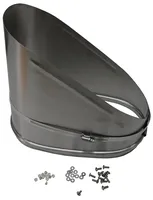
DEFLECTORS, Exhaust, CASA 212

$2,639.00
Retail Price: $3,298.75
See Eligible Aircraft
Expected ship date is 06-03-2026.

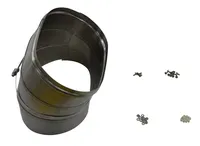
DEFLECTOR, Exhaust, Caravan

$1,800.00
Retail Price: $2,250.00
See Eligible Aircraft
Expected ship date is 04-21-2026.

DEFLECTOR, Exhaust, Camera Ops, Caravan

$2,334.00
Retail Price: $2,917.50
Expected ship date is 05-20-2026.
1

Offering the largest inventory of exhaust system components!

McFarlane now has a full product line of exhaust system components, including AWI, Acorn Welding, and Nicrocraft! These leading exhaust manufacturers offer high-quality components for many major aircraft models including Aero Commander, American Champion, Beechcraft, Cessna, Cirrus, Grumman, Mooney, Piper, and Rockwell. Systems and parts for both Continental and Lycoming engines are available.

AWI Specializes in top quality exhaust systems, engine mounts, carb heat boxes, and more. Their replacement parts are made from stainless steel, aluminum, Inconel, titanium, and magnesium. Advanced aero-technology and precision machining ensure the perfect fit for your aircraft.

AWI Logo (awi-logo.png)

Acorn Welding develops welded, machined, and riveted components for all sectors of aviation. They design and manufacture turbine engine exhaust, Piston aircraft exhaust systems, engine mounts, and support trusses. Other products include assemblies such as induction boxes, seat frame elements, and engine and flight control linkages. Their exhaust products are made from stainless steel or Inconel with design improvements that reduce thermal fatigue and provide longer life.

Acorn Welding Logo (acorn-logo-black.png)

All Nicrocraft™ aircraft exhaust parts are FAA approved and built to the latest OEM specifications. Heat-resistant 321 stainless steel and Inconel are used in the construction of all PMA parts, ensuring longevity and durability. They individually leak-test each and every exhaust system that comes out of their state-of-the art Oklahoma City facility to ensure 100% compliance with safety and performance standards.

Nicrocraft logo (nicrocraft-logo---blue-with-red-built-to-take-the-heat---transparent.png)

Related Information

Can I change the position of the housings on a new turbocharger?

Yes, the compressor and exhaust housings are factory set at a pre-determined position, many times for shipping purposes. The housings can be re-aligned at installation to fit the engine installation. The alignment procedure can be found under the turbocharger Installation Instructions on the Aeroforce.aero website.

Is an overhauled Dry Air Pump as good as a new pump?


We can only speak for Tempest overhauled pumps as we have no control over the quality of other overhaul shops. Before Tempest®/Aero Accessories, LLC offered an overhauled pump, they spent more than a year in research and testing to determine what was required to produce a quality overhauled pump that would last as long as a new pump producing the vacuum or pressure required for aircraft application. In 1984 Tempest®/Aero Accessories, LLC had its overhaul process specification approved by the FAA and began offering quality overhauled vacuum pumps to general aviation. Tempest takes great pride in their state of the art overhaul facility, and produce the best overhauled pump on the market today. Over the years they have acquired FAA-PMA’s for all component parts of the Dry Air Pumps, and have supplied replacement parts to all overhaulers worldwide.

Why should I pre-oil my turbocharger after a new installation?

Pre-oiling should be accomplished at installation or any time the turbocharger oil system is disassembled for any reason. Pre-oiling insures there will be adequate oil flow at the turbocharger bearings to support the shaft load at initial start-up. Just like a crank or camshaft bearing, we do not want to “start” the turbocharger with dry bearings. Once a turbocharger bearing is compromised due to lack of lubrication, turbocharger life will be diminished. Pre-oiling instructions can be found under the turbocharger Installation Instructions on the Aeroforce.aero website.

What is the recommended oil consumption rate for my aircraft?

This is a question that doesn’t have a definitive answer. Oil can be consumed or lost by three different routes in an engine: the rings, leaks and valve guides. In a good, tight engine, there should be very little oil consumption or loss by the guides and none through the leaks. That leaves the rings as your primary concern. The amount of oil going by the rings will vary depending on cylinder type and break-in process. 


Assuming that the cylinders were broken in properly, oil consumption can still vary depending on the type of service and how the aircraft is flown.  Even two identical engines (like on a twin), operated the same way, may have different oil consumption rates.  So what’s right?  Engine manufacturers state that oil consumption of up to a quart an hour is acceptable on some models.  (Some manuals for large radials say that anything over six gallons an hour is excessive.) 


The best answer is that oil consumption will be at a certain level for each engine. Consumption changes shouldn’t be compared to an absolute level, but rather to the level that your engine sets historically.

Select a Category

McFarlane Aviation Family
McFarlane Catalog
Contact Us

Contact us with anything. If we don't have it, we'll help you solve your challenge