






Select a Category
McFarlane Aviation Family


Free Shipping on orders over $500.00
219 products
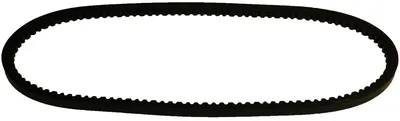
V-BELT, E31.58

V-BELT, G31.30

V-BELT, A37.50

PULLEY V-BELT
PULLEY, V-BELT
PULLEY, V-BELT
PULLEY V-BELT
PULLEY, 1/2" V-BELT
ROTOR ASSY, 24V, BELT DR
| LED Light | Voltage | Possible Cause | Recommended Action |
| Slow Flashing (5s on/5s off) | Less than 12.8V | Battery over-discharged (due to faulty charging system) |
Charge battery. Once charged, the light will stop flashing. |
| Slow Flashing (5s on/5s off) | Less than 13.2V | Weak or failing cell | Charge battery. If voltage drops below 13.2V within a few days, discontinue use. |
| Slow Flashing (5s on/5s off) (> 1 hour time period) | 13.2V-14.6V | Weak or failing cell | Discontinue use. If in flight, this is not an immediate issue unless it is in conjunction with a charging system failure. |
| Slow Flashing (5s on/5s off) | Greater than 15.2V | Over-charging (due to faulty charging system) |
If in flight, shutoff charging system immediately. Aircraft over-voltage protection is required if alternator charging system is greater than 20 amps (i.e. over voltage crowbar circuit) |
| Slow Flashing (5s on/5s off) (< 30 min. time period) | 13.2V – 14.6V | Cell to cell charge levels are not balanced | May come on briefly during periods of high current charging until the cells are automatically balanced. Try charging with a plugin charger, like an Optimate Lithium charger. |
| Solid Light | Any voltage | BMS electronic issue | Discontinue use. If in flight, this is not an immediate issue unless it is in conjunction with a charging system failure. |
| Solid Light that turns off after 3 minutes | Any voltage | Short Circuit protection was activated | Nothing needs to be done. |
| Short Flashing (2s on/2s off) | Any voltage | High battery temperature (> 65°C / 150°F) |
Let battery cool down prior to cranking or charging. |
All batteries have a life span, even if left in the box and never used. Time is a factor even if properly cared for, eventually, all batteries die. An EarthX battery is rated for up to 6 years if properly maintained, which means it is not left in a discharged state (below 13.28V); used in a properly functioning charging system; used with a proper charger; not shorted; and proper temperature ratings have been followed. All batteries will self discharge and depending on the amp hour of the battery, and its temperature it is stored in, the level of discharge and amount of time are variable. Always keep your lithium battery above 13.28V for longest life.
Only when needed which is when the voltage reads below 13.28V. It depends on the battery model (the larger amp hour batteries will need less topping off than say the scooter battery) but if not in use or left in a vehicle, make sure you check the voltage and charge at least once a year. Due to lithium batteries extremely low self-discharge rate, less than 50% of its charge is lost over a 6 month period, so you may not have to charge your battery before the season starts! If the battery is 13.28V or higher, then all is good. If it is less than this, you need to charge it before engine start to ensure a long battery life.
The ETX-Series of batteries have over discharge protection and is designed to prevent a continuous active drain on the battery to the point of damaging the battery, such as leaving your key in the on position, master switch on your aircraft, or parasitic draw as examples. If your battery is reading 0V, or near 0V, then this protection might be activated.
To determine the actual voltage of the battery, remove the negative battery cable and measure the voltage at the terminals with a voltmeter. If less than 8V, it will not accept a charge. Once a lithium battery is approximately 8V, it can be permanently damaged and the EarthX BMS is designed to not allow the recharging of the battery as this is no longer safe to do and can be dangerous and cause cell rupture. Never force a charge into the battery. This is not a battery defect, nor a failed battery, but instead the protection working as it is designed.
The rate of discharge depends on how many amp hours the battery has (less Ah = faster discharge) and the ambient temperature (warmer = faster discharge). When the EarthX battery is about 95% drained, the BMS over discharge protection will disconnect the battery from the active drain so that you do not continue to discharge the battery to the point of damaging it. You know this has happened when you put a voltmeter on the battery installed in the vehicle and it reads close to 0V. We allow this much discharge of the battery to provide you the most energy possible if the drain is intentional, ie: your alternator fails in flight, and you are powering your electronics with the battery. The battery will continue to drain, at a much slower rate, with time as this is impossible to stop batteries from self-discharging. Even “brand new” batteries left in a box will drain and if not recharged and maintained, will be permanently damaged.
It is very important to recharge the battery immediately if it has been drained. The longer the battery remains discharged will shorten the overall life span and increases the chance of permanent damage.
Depending on the amp hour of the battery and the environmental temperature will dictate how much time can pass before it is permanently damaged. Example, the ETX12A is a 4Ah battery and should be recharged within a week whereas the ETX900 is a 15.6Ah battery and should be recharged within a month of finding it in this state.
122 tooth gear rings have a "v" shape, whereas 149 tooth gear rings have a "u" shape. Be aware that just because your aircraft (or engine) is supposed to have a certain ring gear doesn't necessarily mean that it does. You should always confirm and order the correct starter to match.
Yes. When exhaust stacks are removed for AD 2000-01-16 inspections or replacement, adjacent exhaust joints and hardware are often disturbed. On turbocharged models, this may include V-band clamps and couplings at the turbocharger inlet or tailpipe connections, along with gaskets, heat shields, and firesleeve, to ensure proper sealing and fire protection during reassembly. Browse the McFarlane website for those replacement components.
A number of pilots have asked this question. The answer is a definite no. When Shell first started evaluating multigrade aviation piston-engine oils over 25 years ago, testing proved that multigrades formulated only with mineral base oils did not have adequate base oil viscosity (thickness) to properly lubricate all high load points in the engine. Then we tested and flight evaluated a formulation made with all-synthetic base oils.
This formulation had excellent antiwear characteristics in all tests run. However, in the flight evaluations, some engines would reach 600 to 900 hours, then lose oil consumption control and/or compression. When the engines were disassembled, we found that the piston rings were covered with a gray tacky substance that was primarily made up of the lead by-products of combustion (from the use of leaded aviation gasoline).
Although synthetics are excellent lubricants with good high temperature stability and very good low temperature flow characteristics, they are relatively poor solvents.
In an aircraft engine, the lead by-products of combustion must be dissolved by the base oil so they can be carried away from the ring belt area and removed from the engine when the oil is changed. Anticorrosion, antiwear AeroShell Oil W 15W-50 is formulated with 50% synthetic base oils to give it the excellent low temperature flow needed for quick lubrication during cold starting.
The synthetic base oils, along with the unique antiwear additive system, give it antiwear protection unequaled by any other product on the market. In addition, its mineral base oils provide lead absorbency to guard against ring sticking and excessive sludge. The bottom line: The synthetic component of AeroShell Oil W 15W-50 will not harm your engine. Instead, it gives you the best of both oils.
The new fully automatic chargers on the market today need to be hooked up to a battery before they will output any voltage. This is primarily a safety feature that prevents spark when hooked up, and protects the charger against reverse polarity hookup. Some chargers need to see as much as 9V volts before they recognize that they are attached to a battery. Once the charger is hooked up, it should output 13.9-14.6 volts. If your charger does not do this, you may want to contact the manufacturer for further troubleshooting tips.
The system is easy to understand. We place an aligned magnetic field on the pivot so that this field can be measured by an electronic compass which now points to the float. We place this highly accurate compass inside an aluminum housing and outside the fuel tank measuring the direction of the magnetic field through the aluminum. This solid-state compass electronically points to the float in the same manner that a cell phone compass points to north. It is astoundingly accurate and fuel motion has no impact on operation.
Lithium batteries require no maintenance such as adding liquid, worrying about freezing in subzero temperature, or the heat of summer damaging them. Just be sure the terminal connections are tight and free of corrosion. If you have a vehicle that has a drain even if the key is off, (Harley’s definitely do) then you will need to charge them every 1-2 months of inactivity (depending on how much of a draw there is determines the length of time it can sit) by putting a charger until it shows fully charged. If at any point your battery is less than 13.28V, it is in a discharged state and needs to be charged. Any battery left in a discharged state can and will be damaged or life shortened.
Please refer to the Tempest application chart. There are several things you will need to know as most engines have several different spark plugs approved.
Specifications:
Materials:
Plastic:
Elastomer Rubber Liner:
Dimension and Strength Information:
Flammability:
UL94, UL 746A, IEC 60695-11-10
Water Absorption:
Immersion 24 Hour ISO 62 0.9%
Since inception in 2009, EarthX has designed their lithium batteries with a micro-processor-controlled battery management system (BMS) to provide safety and performance features for your battery. EarthX is not new to providing lithium iron phosphate batteries. Over the past 13 years, has become the most trusted and used lithium battery in the experimental aircraft market and by working closely with OEM’s and engine manufacturers a like, this BMS has been developed to be one of the most reliable in the industry. EarthX is not only the exclusive provider for the Indy Race Cars, but EarthX is also the first company in the world and in history to have an FAA TSO certified aircraft battery as a testament to the safety and quality of the batteries.
Features of the BMS protection:
Battery design safety features:
Performance design features:
We understand the fear of a fire in an aircraft is real and justified. We also understand people fear that a lithium battery will spontaneously self-combust with no warning and reason and catch everything near it on fire too. We want to address this fear. The EarthX batteries are LFP chemistry, or lithium iron phosphate, the most abuse tolerant and requires a lot of energy to force them into thermal runaway. The term thermal runaway can mean different things and for a LFP battery, it does not mean a 3-foot-tall explosion of flames, it means it will produce a lot of smoke for about 10 minutes. (It should be noted the type of chemistry that does cause a large fire ball is the most used cell in the world, a Lithium Cobalt cell. This is found in your cell phone, your tablet, your laptop, etc. On a commercial flight, if you are traveling on a 737 with 204 person capacity, it would be typical to have around 300 of these batteries in the cabin with you as a reference point).
To cause a thermal runaway with the EarthX battery, many things in your aircraft, and you as a pilot, would have failed. First, your regulator would have to fail. Then your over voltage protection on your aircraft would have to fail. Then you as a pilot would have to fail and not turn your charging system off (alternator off) as you see the voltage and amps climb, destroying all your electronics on your panel and popping fuses everywhere in the process. If you did nothing but continued to fly, and if the batteries protection failed too or you exceeded the protection limits (over 100V), it takes about 7 minutes of this type of runaway energy to cause a thermal runaway with the battery. The FAA TSO certified approved battery, the ETX900-TSO,and the ETX900-VNT, are in a fireproof containment system (internally) and is a sealed battery that is vented overboard, so even in this catastrophic state, the smoke is pushed overboard and it is not a battery safety issue and it does not cause anything near it to heat or catch on fire either.
As far as the fear of spontaneous self-combustion, the battery must be part of a catalyst situation for it to go into thermal runaway. It will not simply “combust” with no reactor. The batteries have short circuit protection and a battery management system to prevent the use of the battery if it detects a fault. The Hundred series for aircraft also has a fault monitoring that would alert you if something was outside of normal with an LED light that will illuminate.


