Your Cart
Items
Free Shipping on orders over $500.00
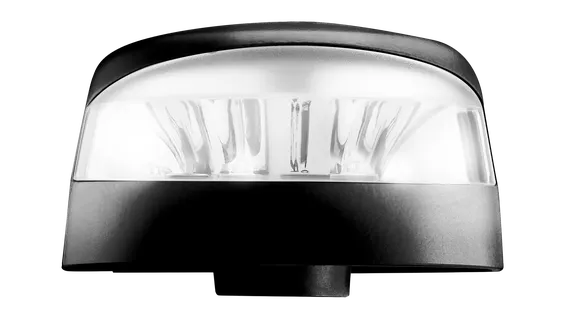
Part # 01-2300-B1-24
NANO BEACON, Strobe, White, 24V, EXP.
Product Details
Specifications
- Approval
- Condition
- New
- Manufacturer
- AeroLEDs
- Dimensions
- L: 4 x W: 4 x H: 2 in
- Weight
- 1.5 lbs
- Unit of Measure
- Each
- McFarlane Part Number
- 01-2300-B1-24
Product Description
AeroLEDs NANO Beacon
NANO Beacon for Experimental Aircraft
The AeroLEDs NANO Beacon is a compact, high-output LED anti-collision light designed for experimental aircraft and UAV/UAS applications where installation space, weight, and available electrical powers are limited.
Its small footprint allows installation in locations that are not practical for traditional beacon systems, making it an excellent choice for new installations or as a supplemental anti-collision light. High-intensity LED technology provides improved aircraft recognition while maintaining a low power consumption and a lightweight, low-profile design.
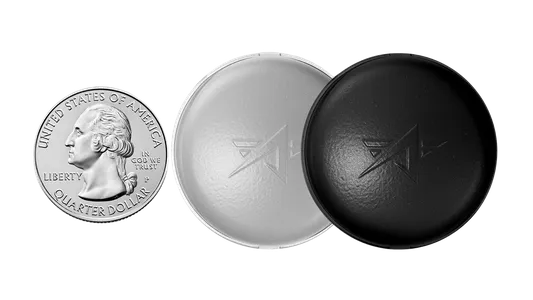
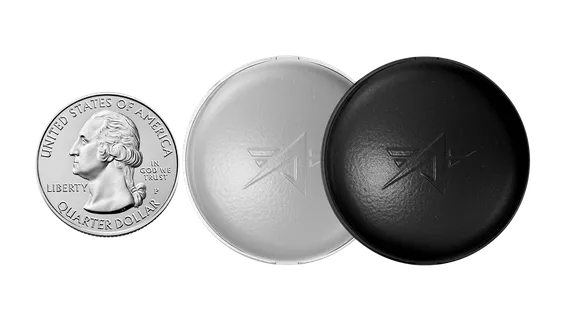
Available with red or white LEDs and black or silver powder-coated housings, the NANO Beacon complements a variety of aircraft configurations and exterior finishes. It can also be synchronized with AeroLEDs NANO wingtip lights to provide a coordinated lighting system.
Specifications:
- Weight: 0.09 lbs.
- Dimensions: 1.58" L x 1.58" W x 0.88" D
- Voltage: 14V and 28V
AMP Draw:
- 14 VDC: 0.33 A (average), 1.2 A (peak)
- 28 VDC: 0.18 A (average), 0.6 A (peak)
| Part Number | Voltage | Base Color | Light Color |
|---|---|---|---|
14 V |
Silver |
Red |
|
28 V |
Silver |
Red |
|
14 V |
Black |
Red |
|
28 V |
Black |
Red |
|
14 V |
Silver |
White |
|
28 V |
Silver |
White |
|
14 V |
Black |
White |
|
28 V |
Black |
White |
WARNING: Cancer and/or Reproductive Harm - California Proposition 65 Resources
FAQs
What is the AeroLEDs NANO Beacon?
A compact, high-output LED anti-collision light designed for experimental aircraft and UAV/UAS applications where installation space, weight, and available electrical power are limited.
What aircraft is the NANO Beacon eligible for?
It is intended for experimental category aircraft
What voltage and current does the NANO Beacon require?
It is available in 14V and 28V versions, drawing 0.33 A average / 1.2 A peak at 14 VDC and 0.18 A average / 0.6 A peak at 28 VDC.
What color and finish options are available?
Red or White LEDs paired with Black or Silver powder-coated housings, to complement a variety of aircraft configurations and exterior finishes
Can the NANO Beacon be paired with other AeroLEDs lights?
Yes, it can be synchronized with AeroLEDs NANO Wingtip lights for a coordinated lighting system.
What is the difference between the Pulsar NS and the Pulsar NSP?
The Pulsar NS has a forward red or green navigation light and a strobe that covers 180 degrees from each wing tip.
The Pulsar NSP has a forward red or green navigation light, a strobe that covers 180 degrees from each wing tip, and a rear white position light.
What are the installation requirements for the SunSpot 36 and 46?
The SunSpot 36LX landing and taxi lights and SunSpot 46LX can be installed with just a log book entry if you can install the light in an existing mount and use the existing wires, switches, and circuit breakers.
The SunSpot 36HX landing and taxi lights and SunSpot 46HX can be installed with the pulse function enabled in any model listed on the AML under STC, or in other aircraft models with a 337 that uses the AML STC as a basis for approval.
What are the installation requirements for the TSO lights?
If the lights are mounted to an existing mounting location with no structural modifications and existing wiring can be re-used, the lights can be installed with a log book entry.
If there are modifications to the wiring, a 337 should be submitted for approval for the installation.
If there are structural modifications made to mount the lights, a more extensive approval may be required, ranging from a 337 to an STC.
What is the recommended wire for the Pulsar and SunTail lights?
We recommend 3 conductor 20 gauge shielded single bundle wire.