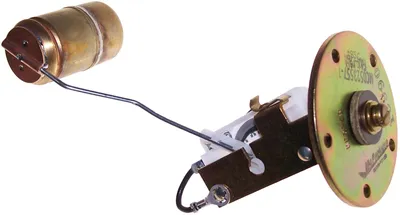
How reliable is the CiES fuel senders?
CiES fuel senders have amassed over 800,000 hrs of operation on Cirrus Aircraft with only thirteen removals out of 23,000 senders for cause. This represents a Mean Time to Failure of over 60,000 hrs. This reliability exceeds every other system on the Cirrus aircraft. Cirrus is so impressed that they specified CiES technology on the Cirrus Jet. To back that amazing reliability, we warranty the senders for non-transferable life.
Do CiES digital fuel senders have TSO Approval? Does CiES have PMA?
Yes, the TSO ensures a quality and repeatable fuel level output under all aircraft conditions and STC demonstrates that these senders are suitable for use in specific type certificated aircraft. This is the only TSO'd fuel sender available for retrofit in GA aircraft. TSO approval ensures that the product manufacturing has been accomplished in FAA approved quality system, as such, TSO products do not require PMA.
I installed a new fuel quantity transmitter and the system is still not working. What is wrong?
There are several other components in the fuel indicating system which could be the issue or are causing the indication problems:
- Ensure that your aircraft fuel indicating system utilized Stewart Warner style transmitters.
- Even if your aircraft originally came with that style, there were many Cessna Service Bulletins to replace them with the Rochester style. Our transmitters will not work with those components if they have been changed. This was a very common SB when Cessna switched over to Rochester.
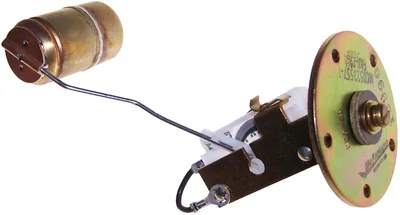
- Transmitter Identification shows the difference in the Rochester style and the original Stewert Warner transmitter.
- McFarlane transmitters and Cessna Stewart Warner transmitters have an electrical resistance range of about 32 ohms when in the full position and 250 ohms in the empty position. This can be measured with an ohm meter connected between the wire terminal and the metal body. Note that the gold dichromate corrosion treatment on the zinc plating is a poor conductor. The metal body must be scratched a little to get a good electrical connection. The Rochester transmitter has a much different resistance pattern than the Stewart Warner or McFarlane transmitter.
- Consult your log books and check the part numbers of the fuel gauges and transmitters. Do not rely on Illustrated Parts Catalog or eligibility.
- With the age of most of the general aviation fleet, the possibility of corrosion in the wires or grounding is very likely. The gauge (indicator) may not be working correctly or properly calibrated.
- Since the transmitter gauge system works with very low voltage and very low milliamp electrical flow it is very sensitive to proper grounding and high resistance in electrical connections. Most problems are related to electrical connections.
- Excess resistance in the transmitter circuit can be detected by measuring the transmitter resistance with the transmitter being installed but without the wire connected at the terminal, and then measuring the resistance at the transmitter wire at the back of the gauge with the transmitter wire connected to the transmitter terminal and the transmitter wire disconnected from the fuel gauge and the other ohm meter connection to a ground at the back of the gauge. The resistance readings should be very close to the first resistance reading. In other words, you are measuring the transmitter resistance first without the airplane circuit and then comparing the reading with the airplane electrical circuit.
- If the preceding wiring check shows good, the problem is likely in the gauge. The fuel gauge has a brass grounding strap that grounds the internal electrical coils to the gauge case. With years of service this grounding strap can develop a thin layer of corrosion that restricts electrical flow. When this happens the gauge will show more fuel than what is in the tank which is not good! Cleaning this ground strap should fix the problem. Refer to the Cessna service manuals for detailed trouble shooting and maintenance information.
Caution! Never short the battery power to the transmitter wire! It will take only seconds before the stainless steel resistance wire in the Cessna transmitter will glow red hot in the fuel tank. The hot wire could explode the tank! Never have power on when trouble shooting the fuel gauging system.
Electricity in the Fuel Tank. Is it Safe?
Always check the fuel gauge system for proper calibration per the Cessna maintenance instructions.
What is the pedigree of the CiES fuel sender?
CiES used Cirrus Aircraft, CiES launch partner, to successfully demonstrate that CiES aviation-proven manufacturing and development process yielded a superior product that is suitable for use in all type certificated aircraft. CiES is qualified to RTCA DO-254 and the digital fuel senders exposed to the aircraft environmental conditions for wing mounting by RTCA DO-160.
Can I use a McFarlane transmitter on a Cessna 152 aircraft?
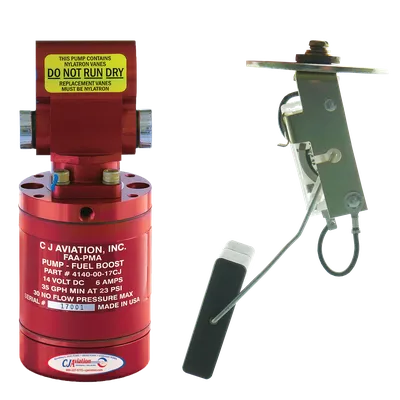
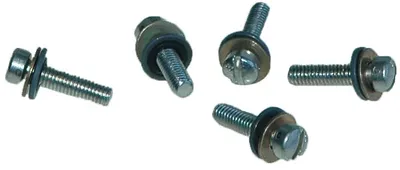
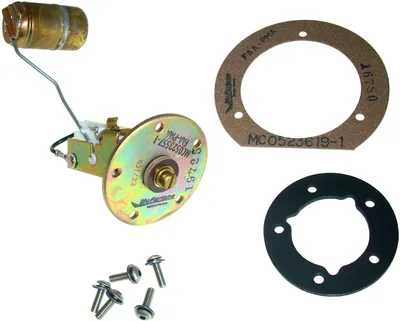
No, the fuel indicating system on a Cessna 152 is unique and McFarlane has not designed a transmitter for them yet. However, we do have replacement fuel quantity transmitter gaskets and screw seal assemblies available for this aircraft.
Fuel gauges don’t work in the GA aircraft, why would installing your product be different?
Original resistive aircraft fuel senders were designed to measure approx. 20 gallons and provide a resolution of 0.3 of a gallon between readings. These resistive senders were intended for automotive and farm machinery applications and are typically made of steel. The aircraft application places additional stresses on these commercial products, from moisture born corrosion to large movements in fuel in and out of plane of the sender. CiES designed an aviation-grade fuel sender from the outset. We addressed the moisture borne corrosion issues and also addressed fuel motion in all axis and we designed a system to give excellent resolution. Our resolution capability is less than (1/10 of a gallon) for fuel tanks that can hold hundreds of gallons of fuel.
What cockpit interfaces do the CiES digital fuel sender interface to?
We can output a DIGITAL SIGNAL to:
- Garmin G950, G1000,
- G500/G600 TXi, G3X, GI275
- Aerospace Logic FL20XD Series
- JPI 900, 930, 960
- EI CGR-30 & MVP-50
How does the CiES sender work?
The system is easy to understand. We place an aligned magnetic field on the pivot so that this field can be measured by an electronic compass which now points to the float. We place this highly accurate compass inside an aluminum housing and outside the fuel tank measuring the direction of the magnetic field through the aluminum. This solid-state compass electronically points to the float in the same manner that a cell phone compass points to north. It is astoundingly accurate and fuel motion has no impact on operation.
Will these sensors work with my existing fuel gauges?
While CiES designed the sender to be able to output to a resistance input analog fuel gauge, there are several issues that make this interface less than ideal. First - an analog gauge has its own characteristic and that has to be matched to the tank characteristic. This would be, at present, a remove, reprogram and replace proposition until the gauge and tank content correlate. Second - Analog gauging for fuel applied to aircraft utilized gauge interfaces that were not designed to be accurate. We see gauge hysteresis and variations that make accurate fuel reporting nearly impossible. CiES is committed to accurate fuel gauging in aircraft, and these interfaces do not allow that to easily occur. Note: if the original aircraft gauge is the only interface that will work for your aircraft, CiES is working on two potential solutions. One will require rebuilt or qualified aircraft gauging, the other replaces the existing pointer driver with a stepper motor.
Which fuel cap washer will fit my fuel cap?
We have three types of fuel cap washers. In order to know the correct washer, the fuel cap part number must be known. It can usually be found at the bottom of the fuel cap assembly.
I have a fuel totalizer, why would I need a working fuel gauge?
A functional fuel gauge is required by regulation and is supposed to work as the manufacturer intended. While some people in aviation cast a broad net on what working means, according to the FAA, it means the ability to accurately show usable fuel in each tank. Gauges that waver or show merely a trend in operation are not functional. Fuel gauges are required, as it takes the fundamental issue of pilot first impression of starting fuel level out of the equation as well as any other fuel anomalies that could happen in flight.
What is causing the fuel (or oil) to leak from my Fuel Pump drain line?
Leaking fuel or oil through the fuel pump overboard drain line indicates the rotary seal is running dry or contamination happened in the field. Your fuel pump should be replaced before further flight.
What is causing my fuel pressure to fluctuate?
Fluctuating fuel pressure can be the result of the following:
- A worn fuel pressure gauge
- A worn or broken O-ring on the inlet side fuel fitting
- An obstruction in the induction system (air intake)
- A clogged or dirty fuel strainer
- Foreign material inside the fuel body (such as fuel cell sealant, thread sealant, or a drill shaving)
How do I keep contaminants out of my fuel system?
The fuel selector valve works in unscreened fuel. Contaminated fuel can cause selector valve seal damage. When fueling from possibly contaminated fuel sources McFarlane recommends the use of a fuel filter, such as Mr. Funnel or another filtering device, to reduce trash in the fuel system.
What is causing my fuel pressure to fall below the “green arc”?
The most common reasons for low fuel flow/pressure are the following:
- A worn or broken O-ring on the inlet side fuel fitting can cause an inlet suction leak. An inlet air leak will result in low Fuel Pump output pressure.
- A weak operating spring in the Fuel Pump diaphragm assembly
- A worn fuel pressure gauge
- A clogged fuel vent or fuel cap
- A constriction in a fuel line either externally (a kinked hose), or internally (due to a collapsed hose lining)
- Wrong fuel pump for the installation
What is the benefit to having accurate fuel level?
While there are a lot of theories of why pilots run out of fuel, much of what is commonly reported does not have actual research to support the statements. What we know, is that due to our involvement in this business and having Cirrus outfitting the system on new SR20 and SR22 aircraft since 2012 we now have a growing number of aircraft where fuel indication is proven to be reliable and accurate. The rate of fuel accidents or incidents primarily attributed to starving the engine of fuel is zero.* While older Cirrus aircraft, all of which have totalizers, suffer and continue to suffer fuel accidents, this fleet of new aircraft has not suffered a single fuel incident.*
* We have one incident where a severe heroin addiction was implicated, and an accident where the ferry tank fuel valve failed.
Do I need to remove the Cessna fuel strainer standpipe to clean the fuel screen?
Yes. The fuel screen is removed by removing the standpipe. The rubber tipped plunger must be unseated before the standpipe is loosened. Failure to lift the plunger off of its standpipe seat can damage the plunger. Pull the strainer drain knob as if you were draining the fuel bowl. Block or clamp the knob in this position. Insert a smooth round tool such as a screw driver or punch in the standpipe cross-hole and un-screw the standpipe.
I heard fuel gauges only have to be accurate at zero?
While even some in the FAA Flight Standards Offices quote this as verbatim truth, it is absolutely not true. CiES works with all of the FAA ACO offices and the FAA Small Aircraft directorate. Usable fuel is an accurate value for every certificated aircraft flying. So yes, zero usable fuel is an accurate number, but so is full usable fuel (that value is on the fuel filler placard and in your POH). Using simple math 1/2 usable fuel is also an accurate number. The zero-fuel accurate myth is just that, a myth.
How do I know when to replace or service my fuel selector valve?
The most common indication of external fuel valve leaks is the smell of avgas in the cabin. Most valves are located under the cabin floor. Fuel stain on the valve and drain plug or drain valve or on the belly of the aircraft can also indicate external leakage. External leaks are generally around the actuation valve stem. Internal leaks are detected when the fuel is turned off and fuel continues to drip during fuel system maintenance. Inner port leakage will allow fuel from one tank to leak into another fuel tank. This type leak is difficult to detect. Fuel transfer from one tank to another with the fuel valve selected to one tank only will indicate inner-port leakage. An extended period of time is needed to detect fuel transfer from one tank to another. Generally if internal leakage is detected when servicing the fuel system, it is likely there is also inner-port leakage.
I have just installed my new Fuel Pump and my engine will not start. Why?
A common cause for this problem is fuel starvation due to improper installation of the fuel pump. Make sure that the fuel lines are not crossed; that is, the inlet line should be connected to the inlet side of the pump (marked “IN” on the top of the port) and the outlet line should be attached to the fuel pump outlet port. Fuel should be present at the inlet side of the fuel pump.
Improper installation of the fuel pump may result in a misalignment of the operating lever with the operating plunger in the accessory case. If so, there will be no movement of the lever and no pumping motion to provide fuel flow. If misalignment is found upon removal of the pump, the lever is probably damaged or broken. If misalignment of the operating lever has occurred, it will require inspection and repair by a qualified technician.
I installed the correct fuel vent line per your eligibility and it isn’t fitting, what is the problem?
Do you have aftermarket Monarch fuel tanks installed? We have received customer feedback stating that when Monarch or other aftermarket fuel tanks are installed, McFarlane’s fuel vent line does not fit. There is nothing we can do to solve that issue. McFarlane’s fuel vent lines fit well when OEM fuel tanks are installed. Please review the Installation Tips for McFarlane Fuel Vent Lines.
How is the fuel primer sold?
The McFarlane primer is available as a complete fuel primer assembly and knob assembly only, and replacement seals for the knob assembly are available. In many cases, where the old primer bore is still good, the McFarlane knob assembly can be used for a FAA-PMA approved quick fix for your existing primer.
Can ACF-50 be used inside light aircraft fuel tanks to provide a corrosion inhibiting coat?
This is not recommended to be used inside light aircraft fuel tanks. This is not an area wehre ACF-50 was designed. It would mix with the fuel and can cause other issues.
Why does my new fuel vent line appear to be slightly shorter or longer than the original?
Over the years, there were some variations in the original vent lines from Cessna, and variations in the location of the exit hole in the wing. The vent line can be bent a little for proper fit. See the Installation Tips for McFarlane Fuel Vent Lines.
Is there a mandatory replacement time for diaphragm fuel pumps?
Diaphragm fuel pumps should be replaced or overhauled:
- At engine TBO or after ten years in service, whichever occurs first. Replace on condition if leaks develop or performance drops for example.
- Refer to Lycoming Mandatory Service Bulletin 240W for information regarding engine TBO.
How do I maintain my fuel and oil drain valves?
Curtis Superior and SAF-AIR valves are designed for installation in a standard NPT port for NPT threaded valves or an AND-10050 style port for UNF threaded valves. Use a thread sealant or Teflon tape on pipe threaded valves. Never allow any thread sealant on the first thread . This will prevent contamination of the fuel system. Refer to aircraft manufacturer's torque specifications for the aircraft in which it is being used.
Replace the rubber seals as per the aircraft manufacturer’s recommendations or every ten years when no guidance is given. McFarlane stocks replacement seals and seal kits for both Curtis Superior and SAF-AIR valves. The new Curtis valves use a O-ring type seal instead of the flat seal that was previously used.
SAF-AIR valves are designed to be disassembled and the O-rings replaced. Over time, if the valve should start to leak, check to make sure the drain valve is tight. If drain valve is found to be tight, then check the O-rings. All O-rings used are buna "n", MS29513 Style, MIL-P-5315. SAF-AIR O-ring seal kits are available for most of their valves. Add a "K" or "-K" suffix to the valve part number.
Never have a hose attached in flight to the oil drain valve. Engine vibration and the additional attached mass can cause premature seal and valve wear which could result in valve failure and a loss of engine oil.
What pressure is used to test the fuel selector valves after repairs?
We pressure test our repaired valves to a minimum of 5 psi using precision controlled air pressure and a calibrated low pressure indicator. This pressure is above the normal fuel pressure on the valve and below the limits of the springs in the valve. Each valve is submerged in Stoddard solvent while the air pressure is applied to the valve. The valves are then tested in each position to assure that there are no inter-port or external leaks. Leaks are detected by looking for air bubbles escaping from the valve.
Should I use a sealer or lubrication for my Viton gaskets?
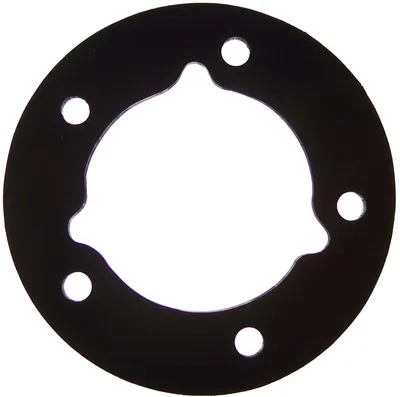
The Viton gasket and screw seals do not require any sealer and must not have any lubricants. Do not over tighten the attachment screws as over tightening can extrude the gasket out from under the transmitter and tear the gasket in the screw holes. This will cause a leak. Tighten the screws evenly until you see the gasket just start to extrude a little. Any lubrication will aggravate the tearing of the gasket.
What causes carbon fouling on my spark plug?
Carbon fouling is indicated by dry, fluffy, sooty deposits. The plug is operating too cold to burn off combustion deposits. This may be fuel related or ignition related. Fuel related causes include rich fuel mixture, faulty carburetor adjustment, excessive idling or improper idle mixture. Ignition causes could be related to a worn spark plug ignition lead, improper magneto timing or running too cold of a spark plug.
How can I safely dissipate a static charge generated when refuelling?
Whenever fuel is poured, pumped or moved from one container to another, a static charge is generated. The same principle is in effect when you walk across a carpet in the winter and get a shock from a doorknob. The charge level and the distance that can be jumped or arced depends on several factors—pump rate, temperature, humidity and containers.
Static electricity is the reason why a ground wire is always connected to commercial airliners and transport trucks whenever fuel is being transferred. When you transfer fuel into your car or light aircraft, the hose has a built-in ground wire that acts as an electrical path to dissipate any static charge. As an added precaution, there is usually an excessively rich air/fuel ratio in the fill pipe which will not burn. There are two primary areas where a pilot should exercise caution when transferring fuel.
First is draining an aircraft tank. For example, if you’re draining a wing tank, you should always connect a jumper cable from the plane to the fuel container. This will dissipate the charge and eliminate the chance of a spark jumping from plane to container, causing a fire. Remember, when you’re draining fuel, there can be enough air circulation so that the air/fuel ratio is in the burnable range.
The second area of concern is the filling process. Many FBOs use a ground wire when filling an aircraft. But in some cases, fuel is transferred from a drum or can into an aircraft. Here, a jumper wire is a good safety precaution to ensure that the charge is dissipated. If you use a metal funnel with metal cans, make sure that the can, funnel and plane are always touching during transfer.
With metal containers, the electrical charge is dissipated to the conductive container where it can be discharged by a ground wire or contact. In plastic containers, there is no good electrically-conductive path to dissipate the charge. Although some people put metal strips into the plastic container, I would recommend the use of metal containers with a good jumper wire. It's the safer way to go.
What causes lead fouling on my spark plug?
Indicated by hard ash-type deposits, lead fouling can be caused by poor fuel vaporization due to cold operating temperatures or high-lead content in the fuel (misdistribution of tetraethyl lead). Lightly fouled plugs can be cleaned, re-gapped, tested and reinstalled using a new copper mounting gasket. Severely fouled plugs should be replaced with new Tempest® spark plugs.
If my aircraft engine has a Supplemental Type Certificate for automotive gasoline, can I break in?
No. Most of the metallurgy in the valve train of aircraft engines was designed to be operated on leaded fuels. Even 80/87 engines were designed for fuels with 0.5 gram per gallon lead. Experience has shown that the lead level in aviation gasoline is especially critical during break-in. So, if you’re breaking in a new or an overhauled engine, make sure you use a leaded 80/87 or 100/130 low lead aviation gasoline for at least the first 50 hours of operation. Some fuel suppliers sell an unleaded 80/87, so make sure you're getting leaded gasoline for breaking in your engine.
What is SEB99-18R1 about?
Cessna SEB99-18R1 describes periodic checks of the fuel gauging system.
Why are there two aircraft magnetos?
The dual arrangement of aircraft magnetos produces a smoother and more complete combustion of the fuel mixture. It also provides for ignition redundancy, so that the engine will continue to run in the event that one magneto malfunctions.
Will the SIM help my engine start?
Absolutely! Compared to a magneto, the SIM provides a more accurately retarded spark and a more consistent, higher energy spark at low engine RPM. Hot-starts are greatly aided by the installation of a SIM, but keep in mind SureFly can’t remedy fuel system shortcomings!
What would cause the drive gear to break on my starter?
In some cases, engine kickback will fracture starter drive gears. Kickback is related to engine set up and can be anything from incorrect timing to problems with the fuel system. If kickback is noticed as a common occurrence on the airplane, diagnose and repair the problem or the replaced starter drive may fracture again. Many of Sky-tec's current starters offer kickback protection.
Why does oil turn black between oil changes, and why does the time it takes to change color vary?
When a straight mineral oil turns dark or black, it usually means that the oil is starting to oxidize and needs to be changed. Because mineral oil doesn’t absorb much of the dirt and sludge in your engine, the oil stays clean and the inside of your engine gets dirty. Ashless dispersant oils, on the other hand, are designed to get dirty so that the engine will stay clean.
Just how quickly the oil turns black depends on a number of factors, including the condition of the engine, the dirt load, the oil temperature, the normal air/fuel mixture, the type of fuel, the time since the last service, and the frequency and duration of your flights. Basically, the important thing to remember is to change your ashless dispersant oil on calendar and engine time, not according to its color. Also, oil analysis can help ensure that the oil is still in good condition even though it may have turned black.
Will my oil temperature be higher or lower with a multigrade?
In most cases, the multigrade oil will run cooler. For a hot-running engine, like turbocharged, high performance or aerobatic aircraft engines, this is good, but for a cool-running engine it can be a disadvantage. If the engine runs too cool, it can't boil off excess moisture and unburned fuel, so there can be a tendency to form acid buildup. For cooler-running engines, pilots should use a winterizing kit, or check with their mechanics on how to keep oil temperature up.