Your Cart
Items
Free Shipping on orders over $500.00

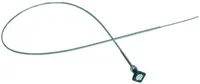
Part # MCS2323-10
WIRE CLAMP, Bolt
Product Details
Specifications
- Approval
- FAA PMA
- Condition
- New
- Manufacturer
- McFarlane Aviation
- Dimensions
- L: 0.59 x W: 0.38 x H: 0.38 in
- Weight
- 0.01 lbs
- Unit of Measure
- Each
- McFarlane Part Number
- MCS2323-10
Product Description
Bolt Style Wire Clamps for Solid Wire Controls
The best for less!
- Many applications: carb heat, cabin air, defrost controls, oxygen control and more
- Unique design to reduce wire stress
- Heat treated stainless steel for wear and corrosion resistance


| Part Number | A - Bolt Dia. (in) | B - Wrench Size (in) | C - Thick (in) | D - Grip Length (in) | E - Hole Position (in) | F - Shank Length (in) | G - Hole Dia. (in) | T - Thread | Application |
|---|---|---|---|---|---|---|---|---|---|
0.188 |
3/8 |
0.125 |
0.250 |
0.183 |
0.653 |
0.073 |
0-32 |
Carb heat, starter, mixture, cabin heat, fuel shutoff, strainer drain, defrost, shutter, wastegate, oxygen control, de-ice, heater, airbox, alternate air, flap/elevator, pressure air dump, heat exchanger |
|
0.250 |
7/16 |
0.156 |
0.312 |
0.325 |
0.781 |
0.073 |
1/4-28 |
Cabin heat, mixture, defrost, cabin heat |
|
0.250 |
7/16 |
0.156 |
0.188 |
0.199 |
0.539 |
0.073 |
1/4-28 |
Strainer drain, cowl flaps, carb heat, alternate air |
|
0.250 |
7/16 |
0.156 |
0.313 |
0.312 |
0.781 |
0.073 |
1/4-28 |
Mixture, flap indicator, flap guide, fuel shut-off |
|
0.188 |
3/8 |
0.125 |
0.125 |
0.188 |
0.531 |
0.073 |
10-32 |
Cabin air, carb heat, starter, airbox, defrost, flap, shutter, oxygen |
|
0.250 |
7/16 |
0.156 |
0.188 |
0.355 |
0.656 |
0.073 |
1/4-28 |
Mixture, hopper, induction |
|
0.188 |
3/8 |
0.125 |
0.250 |
0.192 |
0.656 |
0.076 |
10-32 |
Fuel shut-off, alternate air, flap elevator trim |
|
0.188 |
3/8 |
0.125 |
0.250 |
0.202 |
0.656 |
0.096 |
10-32 |
Fuel shut-off oxygen control |
|
0.250 |
7/16 |
0.156 |
0.438 |
0.343 |
0.906 |
0.129 |
1/4-28 |
Flap control, flap guide |
|
0.188 |
3/8 |
0.125 |
0.125 |
0.204 |
0.477 |
0.079 |
10-32 |
Fuel shut-off, heat exchanger |
|
0.188 |
3/8 |
0.125 |
0.250 |
0.266 |
0.656 |
0.076 |
10-32 |
Mixture, bleed air, fuel selector, flap/elevator |
|
0.250 |
7/16 |
0.156 |
0.188 |
0.357 |
0.656 |
0.073 |
1/4-28 |
Mixture, cabin heat, pressurization |
|
0.250 |
7/16 |
0.156 |
0.313 |
0.271 |
0.781 |
0.073 |
1/4-28 |
Mixture, alternate air, bleed air |
|
0.188 |
3/8 |
0.125 |
0.125 |
0.132 |
0.531 |
0.082 |
10-32 |
Cabin heat, cabin air |
|
0.188 |
3/8 |
0.125 |
0.125 |
0.200 |
0.531 |
0.094 |
10-32 |
Defroster |
WARNING: Cancer and/or Reproductive Harm - California Proposition 65 Resources
Eligible Aircraft
| Make | Model | Start S/N | End S/N | Quantity Per Aircraft | Location | Eligibility Chart |
|---|---|---|---|---|---|---|
| Cessna 210N | 210N | S/N 21064536 – 21064897 | 21064897 | Quantity Per Aircraft 1 | Location fuel shut-off | Eligibility Chart 6189 |
| Cessna 210R | 210R | S/N 21064898 – 21065009 | 21065009 | Quantity Per Aircraft 1 | Location fuel shut-off | Eligibility Chart 6189 |
| Cessna P210N | P210N | S/N P21000761 – P21000834 | P21000834 | Quantity Per Aircraft 1 | Location fuel shutoff | Eligibility Chart 6189 |
| Cessna P210R | P210R | S/N P21000835 – P21000874 | P21000874 | Quantity Per Aircraft 1 | Location fuel shutoff | Eligibility Chart 6189 |
| Cessna T210N | T210N | S/N 21064536 – 21064897 | 21064897 | Quantity Per Aircraft 1 | Location fuel shut-off | Eligibility Chart 6189 |
| Cessna T210R | T210R | S/N 21064898 – 21065009 | 21065009 | Quantity Per Aircraft 1 | Location fuel shut-off | Eligibility Chart 6189 |
| Cessna FT337GP (FP337) | FT337GP (FP337) | S/N FP3370001 – FP3370022 | FP3370022 | Quantity Per Aircraft 1 | Location rear heat exchanger | Eligibility Chart 6189 |
| Cessna FT337GP (FP337) | FT337GP (FP337) | S/N FP3370016 – FP3370022 | FP3370022 | Quantity Per Aircraft 1 | Location front heat exchanger | Eligibility Chart 6189 |
| Cessna FT337HP (FP337H) | FT337HP (FP337H) | S/N FP3370023 – FP3370023 | FP3370023 | Quantity Per Aircraft 1 | Location rear heat exchanger | Eligibility Chart 6189 |
| Cessna FT337HP (FP337H) | FT337HP (FP337H) | S/N FP3370023 – FP3370023 | FP3370023 | Quantity Per Aircraft 1 | Location front heat exchanger | Eligibility Chart 6189 |
| Cessna P337H | P337H | S/N P3370293 – P3370356 | P3370356 | Quantity Per Aircraft 1 | Location rear heat exchanger | Eligibility Chart 6189 |
| Cessna P337H | P337H | S/N P3370293 – P3370356 | P3370356 | Quantity Per Aircraft 1 | Location front heat exchanger | Eligibility Chart 6189 |
| Cessna T337G | T337G | S/N P3370001 – P3370292 | P3370292 | Quantity Per Aircraft 1 | Location rear heat exchanger | Eligibility Chart 6189 |
| Cessna T337G | T337G | S/N P3370226 – P3370292 | P3370292 | Quantity Per Aircraft 1 | Location front heat exchanger | Eligibility Chart 6189 |
| Cessna T337H-SP | T337H-SP | S/N 33701920 – 33701955 | 33701955 | Quantity Per Aircraft 1 | Location rear heat exchanger | Eligibility Chart 6189 |
| Cessna T337H-SP | T337H-SP | S/N 33701920 – 33701955 | 33701955 | Quantity Per Aircraft 1 | Location front heat exchanger | Eligibility Chart 6189 |
Cross Reference
Reference only: Please verify the product is eligible for your aircraft before adding to your cart.
-
0450311-10
-
S2323-10
FAQs
How do I keep contaminants out of my fuel system?
The fuel selector valve works in unscreened fuel. Contaminated fuel can cause selector valve seal damage. When fueling from possibly contaminated fuel sources McFarlane recommends the use of a fuel filter, such as Mr. Funnel or another filtering device, to reduce trash in the fuel system.
What pressure is used to test the fuel selector valves after repairs?
We pressure test our repaired valves to a minimum of 5 psi using precision controlled air pressure and a calibrated low pressure indicator. This pressure is above the normal fuel pressure on the valve and below the limits of the springs in the valve. Each valve is submerged in Stoddard solvent while the air pressure is applied to the valve. The valves are then tested in each position to assure that there are no inter-port or external leaks. Leaks are detected by looking for air bubbles escaping from the valve.
How do I know when to replace or service my fuel selector valve?
The most common indication of external fuel valve leaks is the smell of avgas in the cabin. Most valves are located under the cabin floor. Fuel stain on the valve and drain plug or drain valve or on the belly of the aircraft can also indicate external leakage. External leaks are generally around the actuation valve stem. Internal leaks are detected when the fuel is turned off and fuel continues to drip during fuel system maintenance. Inner port leakage will allow fuel from one tank to leak into another fuel tank. This type leak is difficult to detect. Fuel transfer from one tank to another with the fuel valve selected to one tank only will indicate inner-port leakage. An extended period of time is needed to detect fuel transfer from one tank to another. Generally if internal leakage is detected when servicing the fuel system, it is likely there is also inner-port leakage.